
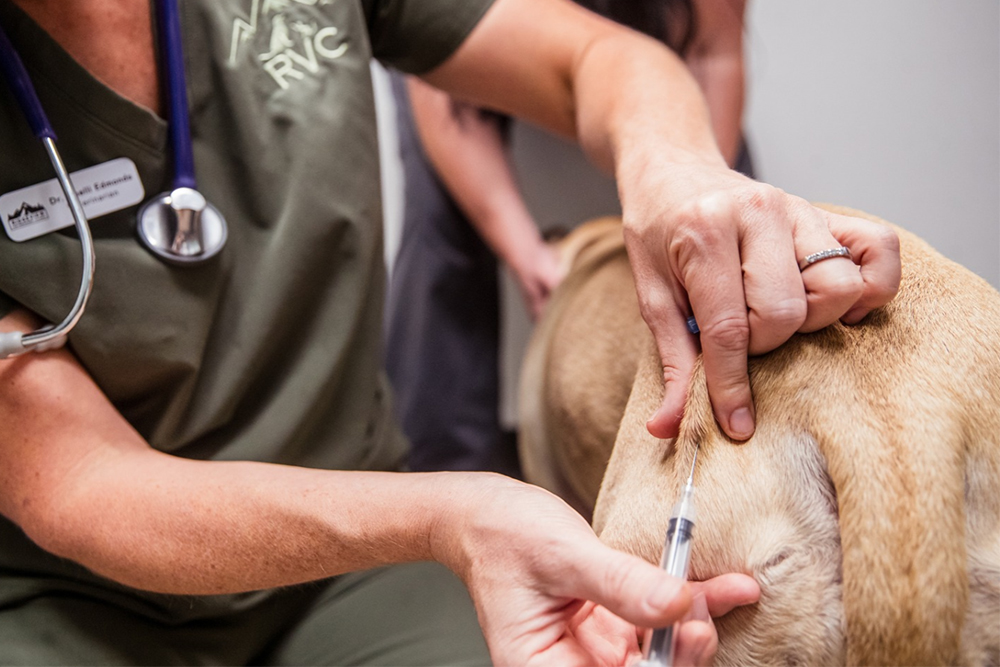
Few topics get pet owners asking more questions than vaccines. How often does my dog really need them? Is a titer test a good alternative? What does my pet actually need living in Central Oregon? These are good questions, and we’re happy to talk through them.
At Ridgeview Veterinary Clinic, our approach is personalized. There’s no single schedule that fits every pet, and the right plan depends on your pet’s age, health, lifestyle, and risk. Here’s a look at how we think about vaccines and titers.
Core and Lifestyle Vaccines: What’s the Difference?
Vaccines generally fall into two groups.
Core vaccines are recommended for nearly every pet because the diseases are serious, widespread, or pose a risk to people.
- Dogs: the rabies vaccine and the DHPP vaccine, a combination that protects against distemper, parvovirus, and other serious diseases
- Cats: the rabies vaccine and the FVRCP vaccine, a combination that protects against feline distemper and common respiratory viruses
Lifestyle vaccines are recommended based on how your pet lives. Some examples include:
- Bordetella (kennel cough): often needed for pets who go to boarding, daycare, grooming, or training classes
- Leptospirosis: a bacterial disease spread through wildlife urine and contaminated water, which may be a consideration for dogs who hike, swim, or spend time near streams and ponds
- Canine influenza: depends on exposure to other dogs and facility requirements
- Feline leukemia: often recommended for kittens and for cats who go outdoors or live with other cats
Many Redmond dogs spend their weekends on trails and rivers, and others rarely leave the backyard. Those two dogs may need very different vaccine plans.
What Is a Titer Test?
A titer is a blood test that measures the level of antibodies your pet has against a specific disease. It gives us a snapshot of whether your pet’s immune system is still protected against certain viruses, such as distemper and parvovirus in dogs.
For some pets, a titer can help guide the conversation about whether a booster is needed right away. That’s especially appealing for owners who want a thoughtful, individualized approach, or for pets with a history of vaccine reactions or certain health conditions.
What Titers Can and Can’t Do
Titers are a useful tool, but they have limits worth knowing about:
- Rabies: a titer does not replace the rabies vaccine. Rabies vaccination is required by law for dogs in Oregon, and it’s strongly recommended for cats because of the risk to people.
- Not every disease can be tested: titers are most useful for certain core diseases. Many lifestyle vaccines, like Bordetella and leptospirosis, don’t have a reliable titer to guide decisions.
- A good result is a snapshot: it reflects protection at the time of testing, so it’s one piece of a bigger picture.
- Facility acceptance varies: some boarding, daycare, and grooming facilities require proof of vaccination and may not accept titer results in place of it. If your pet attends one, check with them first.
Why Regular Visits Still Matter
Vaccines are only one part of preventive care. A yearly wellness exam gives us the chance to check your pet from nose to tail, review parasite prevention, discuss nutrition and dental health, and catch small changes before they become bigger problems. For senior pets, we recommend visits twice a year.
Puppies and Kittens Need a Strong Start
Young pets need a series of vaccines to build reliable protection, because the immunity they get from their mother fades at different times in each baby. Completing the full puppy or kitten series on schedule is one of the most important things you can do for a new family member. If you’ve just welcomed a new pet to your home, give us a call and we’ll map out a plan.
Let’s Build Your Pet’s Plan Together
If you’re unsure what your pet is due for, curious about titers, or wondering what makes sense for your family’s lifestyle, we’d love to help you sort it out. We’ll walk through your pet’s history, talk about how they spend their time, and make recommendations that fit.
To schedule an appointment, book online or call us at (541) 524-5837. Learn more at ridgeviewvetclinic.com.